Finalrentals Blog

Published in Guides Category.
Puerto Montt is a vibrant port city in southern Chile, nestled in the heart of the country's Lake District. It’s the gateway to Patagonia, the place where the Pan-American Highway ends, and adventure begins. Despite being overlooked by many tourists, Puerto Montt offers a rich mix of local culture and stunning natural scenery. When you rent a car in Puerto Montt, you can freely explore the city and its surroundings. This Puerto Montt travel guide will show you how to explore and navigate the city like a local.
Overview of Puerto Montt and Surroundings
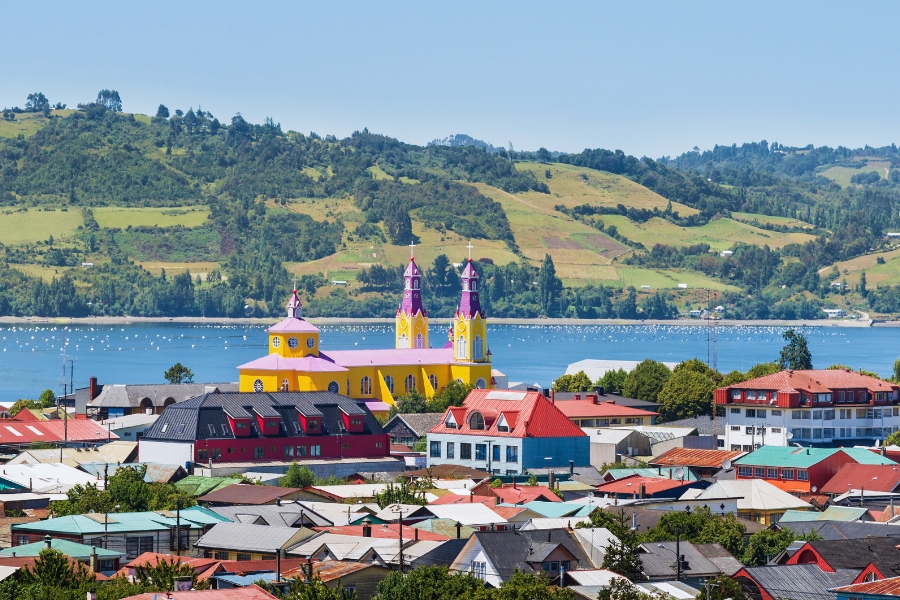
Puerto Montt lies on the Reloncaví Sound, backed by forested hills and distant volcanoes. It is the capital of Chile’s Los Lagos (Lakes) Region and marks the starting point of the famous Carretera Austral, the highway that leads deep into Patagonia. Thanks to its strategic location, the city serves as an ideal base for day trips to nearby volcanoes, tranquil lakes, and the distinctive island of Chiloé.
The city is a bustling coastal hub with a strong sense of local identity. Walking along the waterfront, you will see fishing boats drifting in the bay and residents shopping at the open-air markets. Many travellers treat Puerto Montt as little more than a transit point, but taking the time to explore reveals historic landmarks and delicious seafood.
With your own wheels, you can venture to small fishing villages, scenic lookouts, and quiet coastal spots that are often missed by those without transport. The wider region, sometimes referred to as Chile’s Lake District, is known for its shimmering lakes and snow-capped volcanoes, and a car is the ideal way to explore these landscapes at your own pace. You can pause at a secluded beach, stop at roadside stalls for fresh empanadas, or take spontaneous detours whenever something catches your eye.
Tips for Renting a Car in Puerto Montt
Car hire is easy to arrange in Puerto Montt, especially at El Tepual Airport, located about 16 kilometres from the city centre. Major rental companies have desks at the airport as well as offices in town. To rent a car, you will need a valid driving licence from your home country, which is usually accepted, along with a credit card for the deposit. It is also advisable to carry an International Driving Permit (IDP) as a translation of your licence.
Booking Tips
To secure the best price, try to book your rental a few weeks before your trip. Booking early is especially helpful during Chile’s summer months, when demand is highest. Compare prices online through rental platforms to spot promotions, but always check what is included in the fee. Insurance is a key consideration. Basic liability cover is mandatory in Chile, and rental agencies typically offer additional options such as Collision Damage Waiver. Before driving away, inspect the vehicle for any existing scratches or dents and make sure the rental company records them.
Driver Requirements
Most car hire agencies in Puerto Montt require drivers to be at least 21 years old, although some set the minimum at 22 or 23. Drivers under 25 may pay for a young driver surcharge. Always keep your passport, driving licence, and rental agreement in the car, as you may need to present documents at police checkpoints.
Fuel and Road Support
Fuel in Chile is either petrol (gasoline) or diesel, sold by the litre. In Puerto Montt, you will find plenty of petrol stations, especially along Route 5, the Pan-American Highway. Before travelling into rural or remote areas, fill the tank, as fuel stations can be widely spaced outside the city. Most stations in Chile provide full-service refuelling, where an attendant fills the tank for you. A small tip is customary. It is also wise to ask your rental company for details on roadside assistance.
Rules, Roads, and Tips for Driving in Puerto Montt
Driving in Puerto Montt is manageable, as long as you remember that Chile drives on the right-hand side of the road. The city streets and the Pan-American Highway are paved and in good condition; however, smaller rural roads may feature gravel or uneven surfaces. Traffic signs are in Spanish, so it is worth familiarising yourself with common ones. For example, “Pare” means Stop. Speed limits are posted in kilometres: usually 50 km/h in urban areas, 100 km/h on rural roads, and 120 km/h on highways unless stated otherwise.
Road Conditions
In and around Puerto Montt, you will encounter a mix of modern highways and winding country routes. The main highway, Ruta 5, runs north to south as part of the Pan-American Highway and is a well-maintained dual carriageway near the city. As you travel further out, especially towards the beginning of the Carretera Austral, roads may become narrower and sometimes unpaved. Be ready for changing surfaces. If you are planning to visit remote national parks or rural villages, consider renting a 4WD vehicle. During winter from June to August, heavy rain and occasional snow at higher elevations can make roads slippery.
Traffic Rules and Etiquette
Chilean traffic laws will be familiar to most travellers. Always wear your seatbelt in the front and back seats, and avoid using a mobile phone unless you have hands-free capability. Drunk-driving is strictly prohibited, and the legal alcohol limit is low, so it is best to avoid alcohol completely. Observe posted speed limits as police checkpoints and radar controls are in place.
City Driving and Parking
Puerto Montt’s city centre has a number of one-way streets and can feel a little confusing at first. Traffic becomes heavier during peak hours, typically between 7:00 and 9:00 am and 5:00 and 7:00 pm. It is wise to avoid driving downtown during these times. There are paid parking lots, multi-storey car parks, and mall car parks that charge by the hour. In certain streets, parking is managed by attendants wearing reflective vests. They will issue a ticket or collect a small fee for the time parked. Always park in authorised zones.
Signs such as “No Estacionar” means no parking. Violating parking rules can lead to fines or the car being towed. If your hotel offers free parking, take advantage of it and then walk or take a short taxi ride to the central areas to avoid congestion. When you park, do not leave valuables visible.
Best Places to Visit on a Puerto Montt Road Trip
Thanks to the region’s strong road network, you can explore the best places to visit near Puerto Montt comfortably on day trips by car. Here are some of the must-visit destinations:
1. Angelmó Fish Market
The Angelmó Fish Market is one of the best places to visit in Puerto Montt for an authentic local experience. Located about a ten-minute drive west of the centre, Angelmó is a lively coastal market where fishermen sell the day’s fresh catch each morning. You can park nearby and wander among stalls laden with fish, shellfish, and cooked seafood dishes.
Angelmó is both a market and a casual food court. Try the hearty curanto, a traditional seafood-and-meat stew, or enjoy freshly grilled salmon. You will also find small craft stalls selling woven baskets, carved wood items, and handmade souvenirs. Angelmó is a great place to practise a few Spanish phrases and immerse yourself in everyday culture. Grab lunch at one of the simple cocinerías overlooking the water for the full experience.
2. Puerto Montt Waterfront and City Highlights
As you drive through the city, make time to stop along the Costanera, the waterfront road in the city centre. Near the main Plaza de Armas, visit the wooden Cathedral, one of the city’s oldest surviving buildings from the 19th century. Nearby, the small Juan Pablo II Museum shares stories of the region’s past, including the impact of the 1960 earthquake.
A short uphill drive from the centre brings you to the Mirador Manuel Montt, a panoramic viewpoint. Here, you will find a sign marking Kilometre 0 of the Carretera Austral, a fun photo spot for road trippers. The view is stunning at sunset, when the harbour glows in golden light. This is a favourite spot for locals to park their cars in the evening, and you can enjoy it the same way.
3. Puerto Varas and Lake Llanquihue
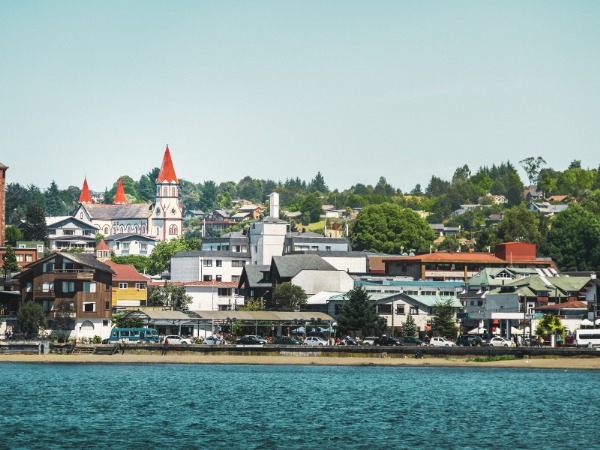
Only twenty minutes north of Puerto Montt via Route 5 lies Puerto Varas, a charming town on the shore of Lake Llanquihue. Known as the “City of Roses,” Puerto Varas blends German-Chilean heritage with Alpine-style houses and manicured gardens. Park in the centre and explore the town on foot. The highlight is the view of Osorno and Calbuco Volcanoes across the lake. On a clear day, the perfect snow-topped cone of Osorno reflects in the water.
Visit the Sacred Heart Church on the hill, stroll the lakeside promenade, and stop for coffee in one of the town’s cafés. With a car, you can continue along the south shore of the lake to Frutillar, about 45 minutes further. Frutillar is known for its beautiful lakeside theatre, its music academy, and strong German influence. Do not miss trying a slice of kuchen (German cake) at a local bakery.
4. Osorno Volcano and Petrohué Falls
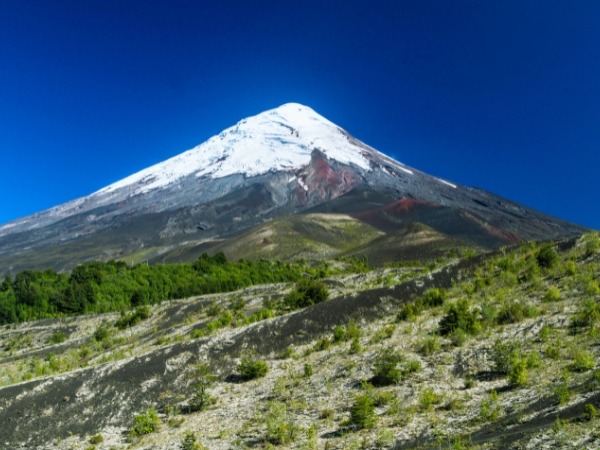
A classic day trip from Puerto Montt is a visit to Volcán Osorno and the nearby Petrohué Falls in Vicente Pérez Rosales National Park. With your car, the drive takes around 90 minutes. The road passes through Ensenada, where you can stop for a snack, before climbing the lower slopes of Osorno. As you ascend, the view of Lake Llanquihue behind is impressive.
At the top, near the ski centre, you will find a lodge and café. On clear days, you may also see distant volcanoes, such as Mount Tronador, located on the Argentine border. Several walking trails begin here, and in summer, you can ride a chairlift partway up the volcano for a higher viewpoint. After exploring Osorno, drive back down and follow the signs to Saltos del Petrohué. These waterfalls feature vivid turquoise water rushing over black volcanic rock. There is a small entrance fee for this area, as it is within the national park.
5. Chiloé Island
For a true local-style adventure, consider a trip to Chiloé Island, famous for its unique culture, wooden churches, and palafitos (colourful stilt houses over the water). Puerto Montt is the perfect starting point, and the drive to the ferry port at Pargua takes about an hour. From there, drive your car onto the ferry for a 30-minute crossing of the Chacao Channel. Reservations are required, as ferries run frequently and fares are paid on board.
Once on Chiloé, you can explore Ancud in the north or travel further to Castro, the island’s lively capital. Castro is known for its brightly painted palafitos and its striking yellow cathedral in the main square. Several of Chiloé’s historic wooden churches are UNESCO World Heritage Sites, including the Church of San Francisco in Castro and the church in Dalcahue. Chiloé also offers a rich mythology and distinctive cuisine. Try curanto al hoyo (a traditional pit-cooked feast) or milcao potato pancakes. For a day trip, you may want to focus on the northern attractions, such as Ancud, Caulín Beach, or Castro.
Final Tips for Experiencing Puerto Montt Like a Local

To truly experience Puerto Montt like a local, blend your road trip adventures with everyday customs and routines. Driving allows you to reach the places locals love, but the real magic comes from engaging with the culture at each stop.
Learn a Few Phrases
Knowing a bit of Spanish will go a long way. Simple words such as hola (hello), gracias (thank you), and ¿dónde está...? (where is...?) help make interactions smoother. Locals appreciate it when visitors try to speak their language, even if it is only a few phrases. This can be helpful when asking for directions or recommendations in more remote areas where English is less common.
Local Food and Drink
Do not limit yourself to international chains or hotel restaurants. Use your car to seek out places where Chileans actually dine. For instance, you can drive to the nearby suburb of Pelluco, known for its seafront restaurants popular with residents. Try paila marina (seafood soup) or pick up empanadas from a roadside stand. In the evenings, visit a picada (a casual local diner) or a pub to sample Chilean beer or a classic pisco sour, the country’s national cocktail. In smaller towns, you might stumble across a local feria or food fair, offering homemade dishes. Keep in mind that dinner in Chile tends to be later, typically between 8 and 10 pm, so plan your meal stops.
Respect the Pace
Even if you have a car and a full itinerary, try to slow down and soak in the atmosphere. When visiting a village market or rural area, take a moment to chat with vendors or sit in the central plaza to watch daily life unfold. Patience also helps, especially when schedules shift. For example, the ferry to Chiloé or a small-town tour may not depart exactly on time, but locals take it calmly, and you can follow their lead.
Takeaway
Experiencing Puerto Montt like a local with a car is all about freedom, discovery, and immersing yourself in the Chilean way of life. You have the convenience to go where you want, from the lively market of Angelmó to the steep streets of Puerto Montt’s hills. To make your travels easier, rent a car in Puerto Montt with Final Rentals. Choose from vehicles for city driving and Chile’s rugged countryside, confirm your booking, and pick up your vehicle at El Tepual International Airport when you land. For extra convenience, download the Final Rentals app on Google Play and the App Store.