If you’re planning a road trip in Chile, Chilean traffic signs might look familiar yet different at the same time. Driving in a foreign country can be challenging, especially when the signs are in another language. Understanding the road signs is essential for your safety and confidence on the road. So, before you lock in those car rental deals in Chile, let’s dive into what those signs and markings mean.
Chile’s traffic sign system combines European-style signage principles with elements commonly seen in North American road systems. In practice, you’ll encounter round speed limit signs, triangular and circular regulatory signs, alongside yellow diamond-shaped warning signs that resemble those used in the United States.
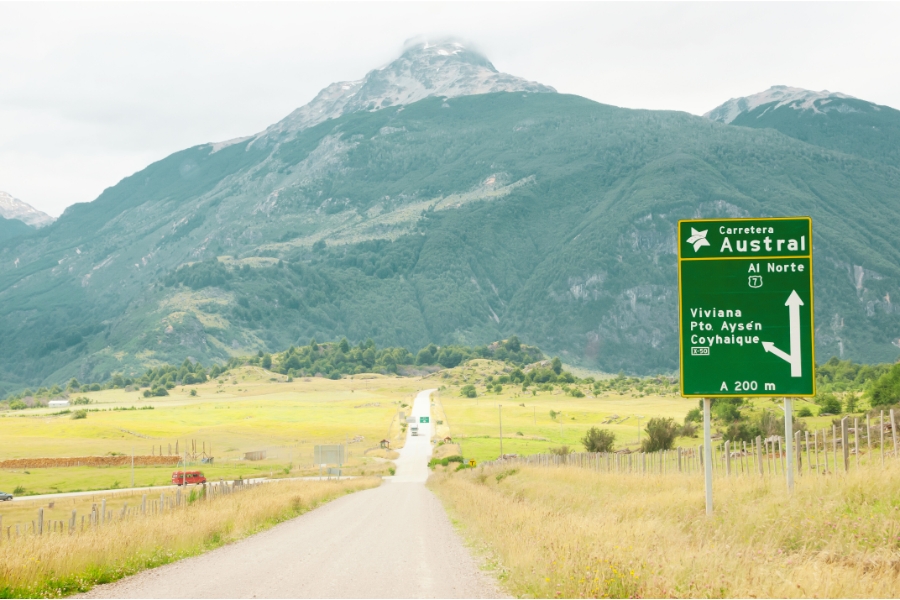
All official traffic signs in Chile are written in Spanish. However, the system relies heavily on visual logic, so you can often understand a sign without knowing the language. Colours and shapes follow consistent meanings. Red circles indicate prohibitions, yellow diamonds warn of hazards, and blue or green signs provide directions or information.
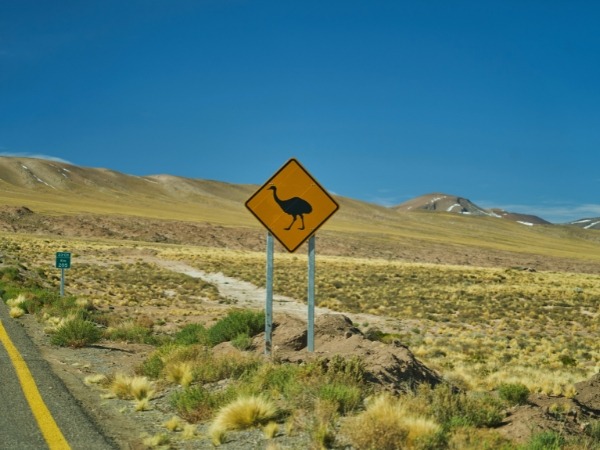
Warning signs for curves, animal crossings, pedestrians, or road conditions typically use clear pictograms that require no translation. When text is necessary, such as on regulatory signs like “No Estacionar” (no parking), it is displayed in uppercase Spanish.
Every road sign in Chile falls into a specific category with its own purpose and design style. Broadly, Chile has regulatory signs, warning signs, and informational signs. Each category has distinct colors and shapes, so you can recognize the type of message at a glance.
Regulatory signs explain what you must or must not do, and they carry full legal authority on Chilean roads. Understanding these Chile traffic symbols is essential. Failing to comply can result in fines or more severe penalties. Most regulatory signs are circular, typically with a white background and red border, although some mandatory actions use blue circles with white arrows.
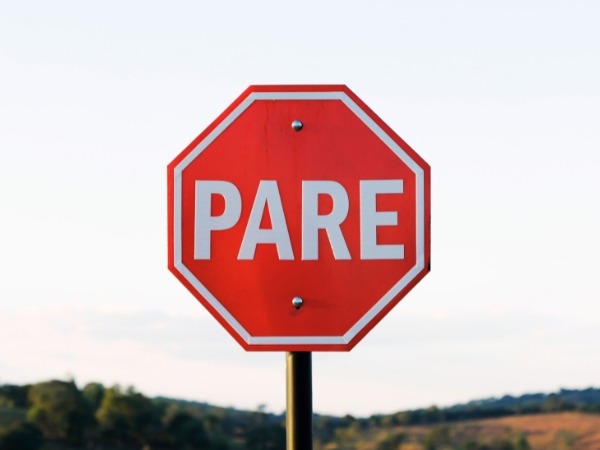
The red octagonal PARE sign functions like a stop sign and requires a complete stop, while CEDA EL PASO (yield) appears as an inverted triangle and means you must give way to other traffic. Speed limits are posted in kilometres per hour inside red-bordered circles, and prohibitions such as no entry, no parking, or no stopping are clearly marked with red slashes.
Warning signs are designed to alert drivers to potential hazards ahead and help prevent accidents. These Chile traffic symbols are almost always yellow diamond-shaped signs with black icons or text. Standard warnings include sharp curves, winding roads, pedestrian crossings, lane merges, animal crossings in rural areas, falling rocks, slippery surfaces, and roadworks.
Informational signs help you navigate, orient yourself, and find services, rather than controlling your driving behaviour. These Chile traffic symbols usually appear in green, blue, or brown. Green signs are used on highways to show directions, distances, and destinations, while blue signs indicate services such as fuel stations, parking areas, hospitals, or police posts. Brown signs mark tourist attractions, national parks, viewpoints, and cultural landmarks. Pay attention to these signs, especially in less populated areas where GPS coverage may be unreliable
While most Chilean signs follow international patterns, there are a few unique signs and situations that you might not encounter in other countries. Chile’s diverse geography, from its long coastline prone to tsunamis to the high Andean peaks, has led to some unique signage. Here are some unique signs to be aware of:
Along Chile’s coastline, you’ll encounter tsunami-related traffic symbols. They are usually blue or green and feature a wave icon with a running figure and an arrow, marking evacuation routes toward higher ground. You may also see signs indicating a “Zona de Tsunami” (tsunami risk zone), showing when you are entering or leaving a vulnerable coastal area.
In cities and towns, you may notice green signs labelled “Zona Segura” (safe zone). It is often placed near parks, plazas, or wide open spaces. These marks designated emergency gathering points during earthquakes or other disasters. Drivers should be aware of them, especially in dense urban areas, as they may indicate places where traffic could be redirected during emergencies.
In mountainous or southern regions, yellow diamond signs warn of strong winds, snow, ice, landslides, or falling rocks. A windsock or swaying tree symbol signals powerful crosswinds that can push vehicles sideways, especially vans or SUVs. Winter signs may show snowflakes or tyre chains, indicating icy roads or mandatory chain use. You may also see altitude markers on high passes, reminding drivers of thin air and rapidly changing conditions.
In mining regions, warnings alert drivers to large industrial vehicles crossing roads. Near volcanoes, evacuation route signs similar to tsunami signage may appear. In rural areas, livestock and wildlife crossing signs are common.
Chile has its own conventions for lines and symbols painted on the pavement. If you come from North America or many other parts of the world, one of the first things you’ll notice is that Chile uses white lines to separate lanes of traffic, even lanes going in opposite directions. This is a bit different from countries that use yellow center lines. Here are some key road markings and what they indicate:
Lane markings in Chile clearly indicate where you may (or may not) change lanes or overtake. Broken white lines separate lanes where lane changes are allowed when safe, while solid white lines mean lane changes are discouraged or prohibited. On two-way roads, a single solid centre line means no overtaking in either direction, whereas a broken centre line allows overtaking when visibility is good and it is safe. Always overtake only when the broken line is on your side, and oncoming traffic is clearly visible.
Yellow markings are less common but signal stricter rules. Double solid yellow lines mean no passing in either direction and must never be crossed. These often appear in hazardous areas such as icy zones, bridges, or mountain roads. You may also see yellow crosshatched or diagonal markings on shoulders or medians. These areas are not for driving, stopping, or parking.
In major cities, certain lanes are reserved for public transport. These are marked with signs and road paint reading “Sólo Bus” or “Bus”, sometimes accompanied by a diamond symbol or coloured pavement (often red). Do not drive in bus-only lanes, as cameras and fines monitor them.
Bicycle lanes are increasingly common, especially in cities. They are marked with white bicycle symbols and may be highlighted in green or physically separated. Never drive or park in bike lanes, and be cautious when turning or opening doors after parking. Always check mirrors for cyclists.
Crosswalks are marked with bold white stripes or parallel lines, and pedestrians always have priority. Near schools, you may see “LENTO” painted on the road, clearly instructing drivers to slow down. Crossing guards may also display “Pare Niños” signs. At junctions, wide white stop lines show exactly where you must stop. Always halt before the line.
Painted arrows indicate permitted movements for each lane. Follow these strictly, especially in cities where lanes may suddenly become turn-only. You may also see text such as “Sólo buses,” “Taxi,” or “Solo viraje,” which signal lane restrictions or upcoming mandatory turns.
Additional markings include reflective studs (“cat’s eyes”) on highways to improve night visibility and painted lane guides at toll plazas indicating cash versus electronic lanes.
When driving in Chile, knowing the default speed limits and the traffic rules is just as important as reading the signs. Regulatory signs post Chile’s speed limits, but here’s a quick rundown:
In cities and towns, the general speed limit is 50 km/h, which applies to most urban streets unless signs indicate otherwise. This limit was reduced from 60 km/h to improve road safety, so it’s best to assume 50 km/h by default when driving in places like Santiago or smaller towns. Watch closely for 30 km/h zones, which are common near schools and in residential areas. School zones are usually clearly marked with a warning sign.
On standard two-lane rural roads, the usual speed limit is 100 km/h, provided the road is paved and conditions are good. However, many rural roads in Chile are winding or mountainous, and posted limits may be lower in hazardous sections. On unpaved or gravel roads, limits may not always be clearly signed, but safe driving speeds are typically much lower due to loose surfaces and reduced traction.
Multi-lane highways generally allow speeds up to 120 km/h, especially on major toll roads such as Ruta 5. Limits can drop to 100 km/h or lower near cities, tunnels, or curvier sections, so always follow posted signs. Some highways also display minimum speed limits (for example, 60 km/h) to maintain traffic flow.
School zones usually enforce a 30 km/h limit during specific hours, and penalties can be higher if you exceed it. Even outside school hours, residential streets should be driven cautiously. While the legal limit may still be 50 km/h, slower speeds around 30 to 40 km/h are often safer due to narrow roads, parked cars, pedestrians, children, and pets.
Here’s what you need to know to stay legal and comfortable on the road:
If you hold a valid driving licence from your home country, you may legally drive in Chile as a tourist. There is no requirement to obtain a local licence for short stays. However, if your licence is not in Spanish (or not an EU-style card), it is strongly recommended to carry an International Driving Permit (IDP). While some car rental desks in Chile may not require it, police officers often prefer Spanish documentation, and having an IDP can avoid delays or misunderstandings.
Chile offers a wide range of international and local car hire companies. Most require drivers to be at least 21 to 25 years old, to have held a licence for a minimum period, and to present a credit card for the deposit. Confirm how toll charges are billed. If you plan to cross borders, you must notify the rental company in advance, as special permits and car rental insurance are required.
Traffic fines are always the driver’s responsibility. Rental companies will charge penalties to your card even after your trip ends. Always carry the vehicle's documents, including registration and insurance, which are typically stored in the glove box, along with your passport for identification.
Understanding Chilean traffic signs and road markings is one of the easiest ways to stay safe on the road. While many signs follow international standards, details such as Spanish wording and hazard-specific warnings can catch first-time visitors off guard. Familiarise yourself with the main sign categories, local warnings, and speed-limit rules to reduce the risk of fines and accidents. Overall, driving in Chile as a tourist is simple when you know what the signs mean.
Start planning your journey by renting a car in Chile with Final Rentals. With Final Rentals, booking a car online is fast and simple. Select El Tepual International Airport as your pickup location, enter your travel dates, and choose a vehicle for your trip. Book and manage your car rental at any time. Download the Final Rentals app on Google Play and the App Store.